
The Story of the Saint Cristina Celebration in Sepino
The Festivities of Saint Cristina in Sepino
The origins of veneration to Saint Christina have very ancient roots. As early as the 4th century, the tomb of the Martyr was venerated in Bolsena, Italy. From there, in different times and circumstances, the veneration to the Saint spread throughout the world: Europe, Asia, Latin America. In Italy alone, there are over eighty places where the Martyr Cristina is venerated.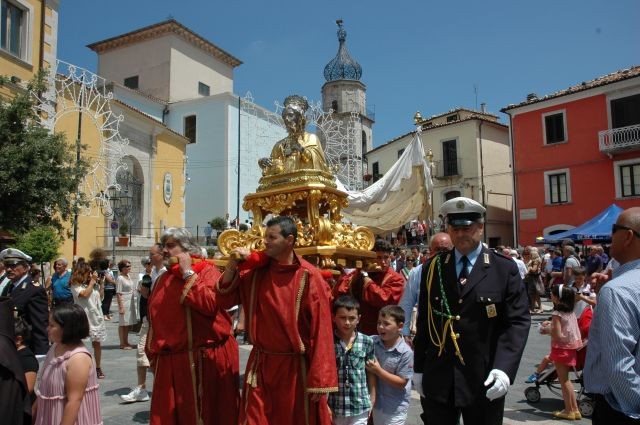
Bolsena and Sepino are historically united in the veneration of the Saint. Recently, on January 8, 1995, the two towns signed a twinning agreement. In Sepino, the centuries-old traditions of worship are numerous, covering the entire year and marked by the changing seasons and the rhythm of peasant life.
January: The Night of the Bells
January 6, the feast of the discovery of the Saint's bones, commemorates the arrival of the relics in Sepino. The festivities begin with the ringing of the bells at 12 noon on January 5th. From the first chime, all work or domestic activities are suspended, out of devotion to the Saint.
January 9 and 10, the feast of the translation, commemorate the entry of the Saint's relics into the church. It is the most cherished feast for the people of Sepino, the one most full of meaning. The feast has a preamble on the evening of the eighth. All the heads of families gather for the Crianzola (a gesture of kindness and respect), originally a meeting of the heads of families, in which the producers offered a taste of the new wine.
This tradition has undergone some changes over time; in fact, for several years it has been open to all the men of the town and they usually meet at the Tre Fontane thermal baths. On the 9th, as soon as vespers are rung, at the Town Hall, the Administration offers the "Verginelle" (girls dressed in white, with a crown of flowers on their heads) the typical "cartoccio" (a gift package with sweets) and a candle that the girls themselves offer to the Saint.
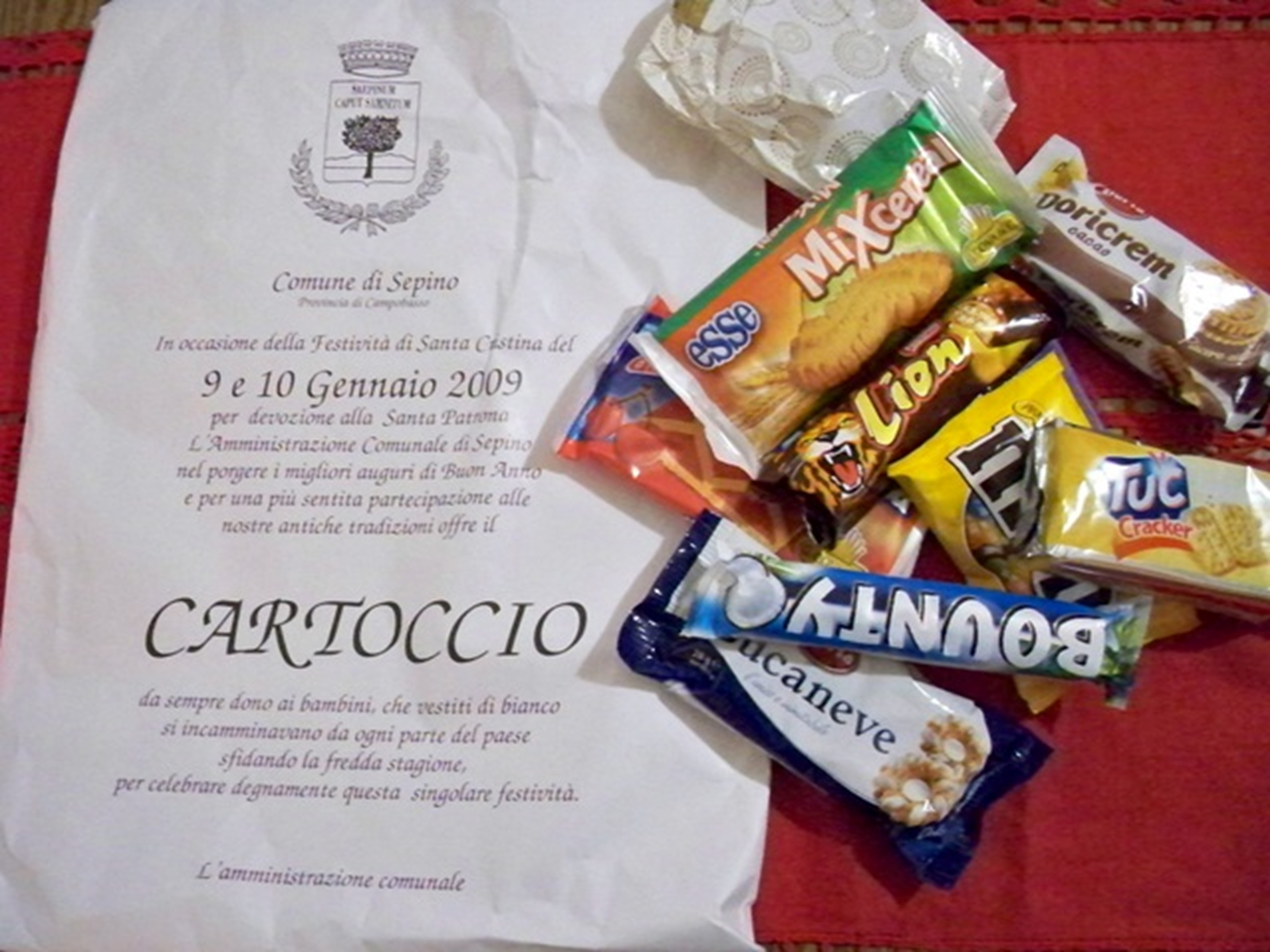 The ringing of the bells is repeated every 15 minutes or so, to call the citizens together. After the fourth ringing, the Mayor, accompanied by the authorities, the administrators and some of the people, goes to the church preceded by the flag and the banner. Everyone carries a candle to offer to the Saint. The ceremony takes place according to an ancient ritual. The "Verginelle" are placed in the front row at the foot of the altar; the Mayor gives a speech summarizing the past year and expressing hopes for the new one; together with the Municipal Administration, he offers gold, frankincense and myrrh as a gift to the Saint.
After the religious service, the drawing of lots for the ringing of the bells takes place in the sacristy. Throughout the night between the 9th and the 10th, the bells are rung manually by the faithful, strictly according to the drawn turns. In ancient times, the teams for each shift were made up of faithful from the same district or neighborhood. The drawing of lots also determines who, on the occasion of the four annual processions, will have the honor of carrying the statue of the Saint or the canopy.
This is a night with a surreal atmosphere, full of charm and joyful popular religiosity, and the sweet and muffled sound has the power to evoke deep memories and nostalgia, linking together past and present, near and far. This mystical atmosphere recalls the memory and veneration of the Patron Saint.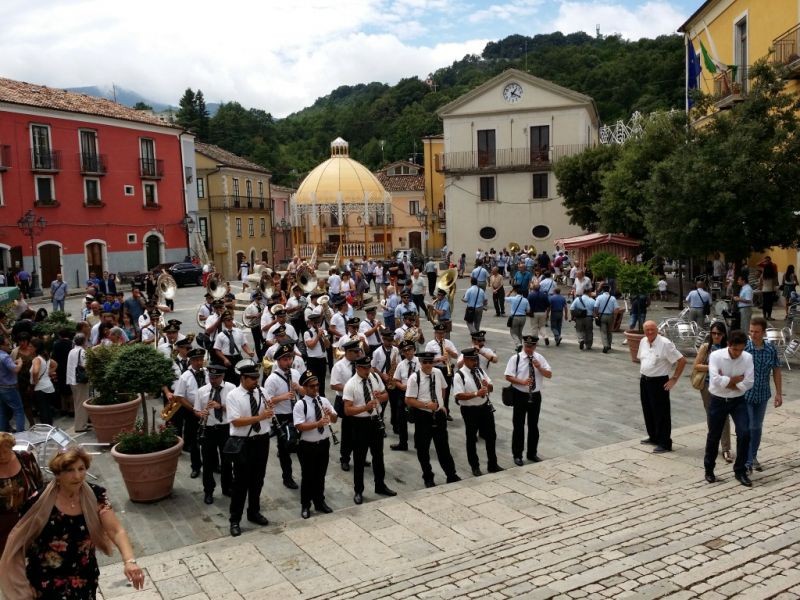
January 10th is a great feast day and is called "intratio". It commemorates the translation of the Saint's body from the hospice of St. Nicholas to the church of the Most Holy Savior and her patronage over the community. On this day, numerous citizens and visitors flock to the confessionals to prepare for communion in honor of the Saint and also to gain the partial indulgence granted by Pope Clement XII. After the Eucharistic celebration, a procession follows to the Canala district, following one of the legendary routes taken by the two pilgrims who brought the relics of St. Cristina.
On the first Sunday of May, with nature bursting forth in its vibrancy and beauty, tradition dictates a solemn celebration in the church and a procession. It is the spring festival to propitiate the fertility of the land. According to the agreement stipulated in 1609 by Francesco Carafa, Lord of Sepino, with the local clergy, the Lord financed the construction of the "Treasury," the chapel where the statue of the Saint is kept, and the clergy was obliged to hold a procession every first Sunday of May. This is the longest procession of the year, crossing the entire town. In the past, children accompanied St. Cristina with a continuous ringing of bells. All the reliquary busts kept in the Treasury are also carried in the procession. In the Colle area, the statues are sprinkled with fragrant petals: "the showering of flowers on the saints".
On July 24th, the martyrdom of St. Cristina is commemorated. Sepino fills with citizens residing abroad, pilgrims, and stalls. The festive atmosphere is palpable everywhere.The church is incredibly crowded, and people pray with devotion and reverence. At 11:00 AM, the Eucharistic celebration begins, presided over by the Archbishop of Campobasso-Bojano, along with the parish priest, friars, and other priests. Afterward, the solemn procession begins, reaching Largo San Nicola where, according to tradition, the pilgrims who brought the relics were housed. The two musical bands wait impatiently, and as soon as the statue passes through the church door, bells and music, prayers and hymns intertwine to honor the Patron Saint who passes by, blessing her people and the town for which she intercedes for favors and graces. After the evening Mass, there is a moment of tradition and folklore.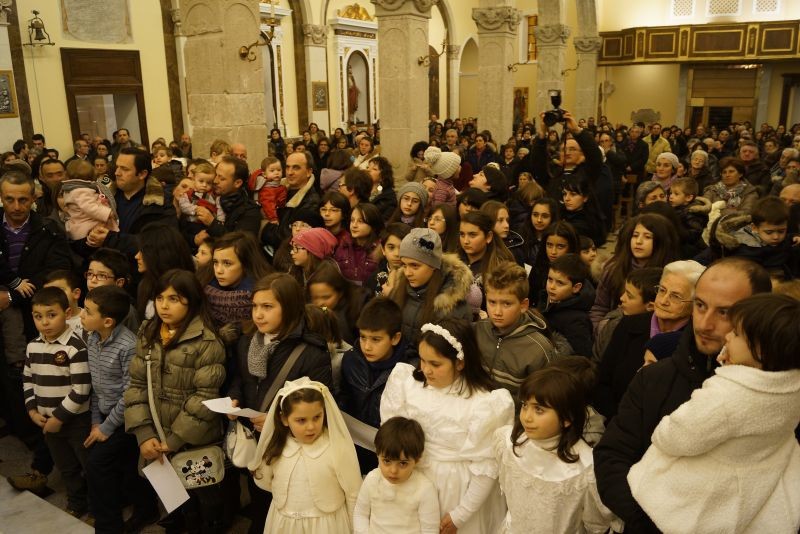
The two musical bands, coming from different directions, meet in the square and begin the "grand concert": all the members of the two bands play the same melody together. The crowd gathers and applauds. From the Town Hall, the mayor, the authorities, and the administration, followed by the people and preceded by the bands, carry the wreath to the monument to the fallen. In an instant, the entire square falls silent; the sound of the trumpet is heard from above, and silence descends upon everyone. The wreath is placed in front of the monument in memory of the fallen, the crowd applauds, and the national anthem resounds majestically. In such powerful moments, no one should be forgotten.
July 25th is dedicated to emigrants. It should be emphasized that: SEPINO BOASTS THE FIRST EMIGRANT FESTIVAL IN THE ENTIRE MOLISE REGION; in fact, in 1903, the president of the Festival Committee decided to extend the feast of Saint Cristina by another day (July 25th), dedicating it to all emigrated citizens. On this day, there is a lunch with the emigrants who return to Sepino for the festival. In the evening, singers of a certain caliber perform in the main square every year.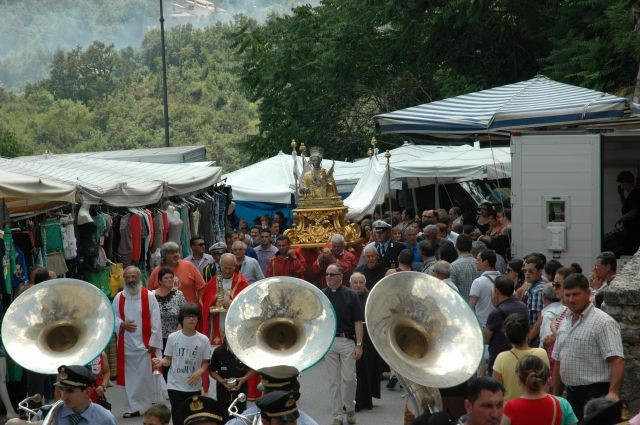
Time passes inexorably, and on the first Sunday of October, Saint Cristina is still among her people, who carry her statue in procession to the locality of Lama, to thank her for the fertility of the land and the abundance of the harvests, before the frost arrives in the valley and the snow falls on the mountains.