Vincenzo Tiberio, the True Discoverer of Penicillin
 In 1945, the Nobel Prize, the most coveted award by the world's greatest researchers, was awarded to the Englishmen Alexander Fleming, Ernst Boris Chain, and the Australian Howard Florey for their merits in the fields of medicine and physiology. The scientists, studying cultures of the mold Penicillium notatum, succeeded in synthesizing for the first time a substance capable of stopping the development and proliferation of bacterial colonies: penicillin.
Two years later, Professor Giuseppe Pezzi, a naval medical officer, brought to light studies that anticipated the discovery of penicillin by 33 years. These studies were further investigated by a young Italian scientist: Dr. Vincenzo Tiberio. In his research published in 1895 at the Institute of Hygiene of the Royal University of Naples, he observed the chemotactic power of mold extracts in experimental infections of typhoid and cholera bacilli.
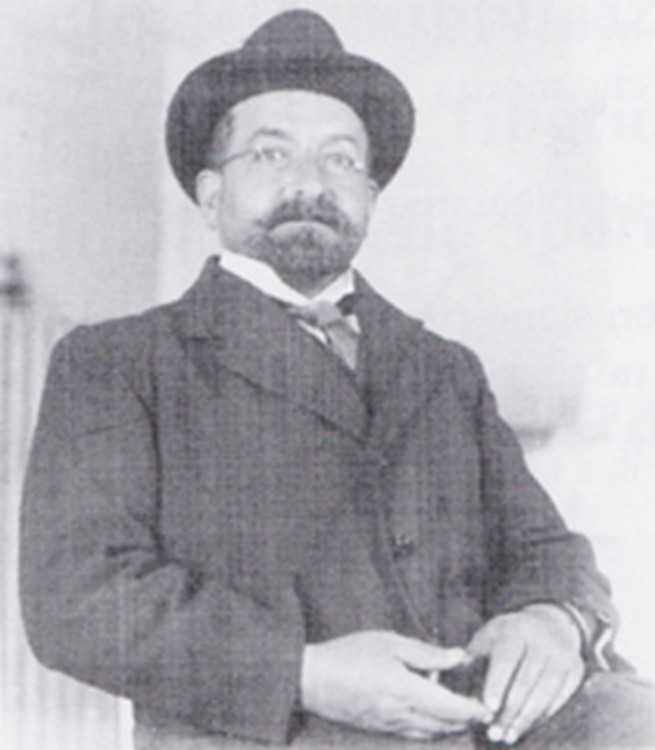
Vincenzo Tiberio was born into a fairly well-to-do family; his father Domenico practiced the profession of notary; he completed his elementary studies in Sepino and his high school studies in Campobasso. He later graduated at the age of only 22 from the Faculty of Medicine at the University of Naples. During this period he stayed with his uncles Graniero, in their house in Arzano; and that choice marked Vincenzo's life; He met his cousin Amalia Teresa, daughter of the Graniero family, whom he married on August 5, 1905, in the chapel of his in-laws' house in Arzano.
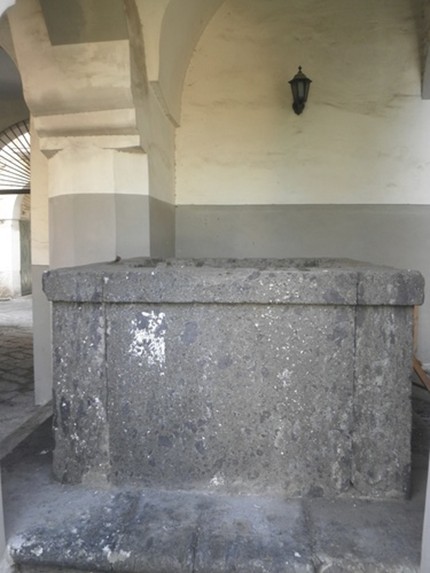
The house in Arzano proved to be a fortunate choice for the young man's professional development, as that rustic corner of the world allowed him to continue exercising his observational skills on nature; in fact, it was there that he discovered the strange behavior of certain molds present inside the well of that house. Every time the well walls were cleaned of
these fungi, the people who drank the water drawn from the well experienced intestinal problems until new molds formed. Tiberio intuited that the molds played a significant role in the potability of the water and imagined that the phenomenon of antibiosis occurred between the molds and certain bacteria.
Tiberio, who the following year became an assistant at the Institute of Hygiene of the same University, directed by Professor De Giaxa, turned his attention to hyphomycetes. However, the action of molds was known to the doctors of ancient Greece and Rome, who used them in the form of a poultice to cover wounds in order to prevent suppuration. In 1895, after the publication of his work, Vincenzo Tiberio participated in the competition for a 2nd class doctor in the Maritime Health Corps and won. It has been wondered why a young and brilliant university assistant and author of a research of considerable interest decided to leave such a promising career to join the Royal Navy. The answer lies in the "Diaries" of the doctor from Molise: Tiberio had a desire to know the world and to broaden his culture and experiences, as well as a fervent patriotism. After several expeditions in which his primary focus was the prevention of diseases related to life at sea and the administration of precise food rations to the sailors, he distinguished himself especially in the expedition to Zanzibar where he managed to cure some sailors suffering from smallpox and beriberi thanks to the integration of extracts from the cinchona plant and iron.
Upon returning to Italy, he actively participated in providing aid to the populations severely affected by the terrible earthquake of 1905 that razed Messina and Reggio Calabria, managing to save over 2,000 people. "For having distinguished himself in diligence, courage, philanthropy and selflessness," he received an important award. In March 1912, Tiberio was appointed director of the bacteriological laboratory of the military hospital in La Maddalena, where he remained until November of the same year; and, even in such a limited period, he managed to leave his mark as a researcher, dedicating himself in particular to the problems related to malarial infections, which were very widespread in that area at the time. He was then transferred to Libya, and on January 13, 1913, he arrived in Tobruk to assume the position of director of the analytical laboratory.
There, he completed studies, later documented in an important scientific work on "Libyan Pathology and Anti-Typhoid Vaccination." The anti-typhoid vaccination, which he promptly implemented, prevented the disease from spreading among the Royal Navy personnel, so much so that in 1913 only two cases of paratyphoid B, of mild clinical severity, occurred. It was in Tobruk that, on August 16, 1913, he received news from the Ministry of his promotion to major. With that rank, he was transferred to Naples, where on January 7, 1915, his industrious life ended at the age of only 46.
discovered the
bacteria
The First World War had already begun, which would soon involve Italy as well. Recently, the hypothesis has been raised that Fleming may have been aware of Tiberio's studies. In fact, at the time Naples was a very important center of study at an international level, and it is possible, despite the publications being in Italian (in fact, at that time it was customary to publish scientific essays in one's native language), that these could have been used as a starting point for new research.
The authorship of the discovery can now be safely attributed to Tiberio, given his publications preceding Fleming's work, and despite this not being recognized internationally, we believe that, beyond any controversy that the people of Sepino should be very proud that Italy and the town of Sepino gave birth to one of the most innovative minds of the last century and offer as an example to the new generations the healthy and genuine values of people like Vincenzo Tiberio. He died on January 7, 1915 and is buried in Sepino.
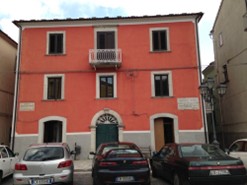
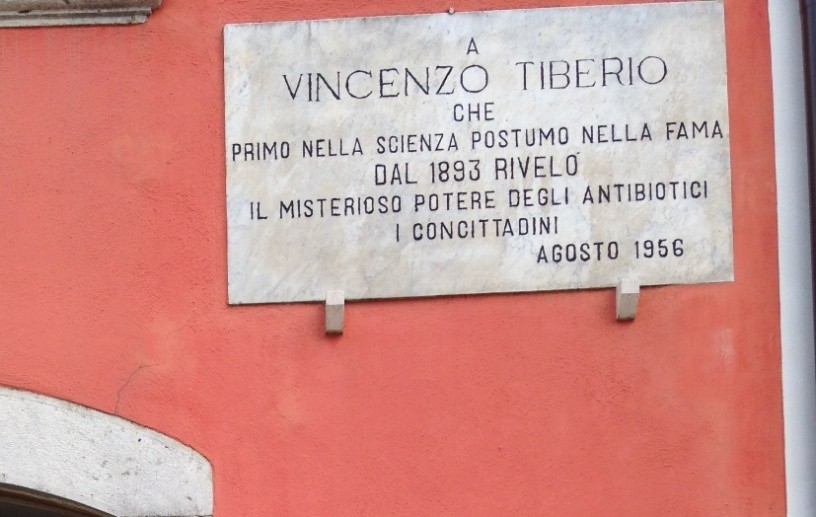
Vincenzo Tiberio house in Sepino: